
The Pipes
Relatively few organ builders make their own pipes, opting to buy them instead from supply houses. At Fratelli Ruffatti, however, we make all our own pipes. This allows us to have full control over the quality of materials and manufacturing processes, so that we can customize the sound of each of our instruments. Such conditions are difficult to achieve if one has to choose pipes from a catalogue, as extensive as it may be.
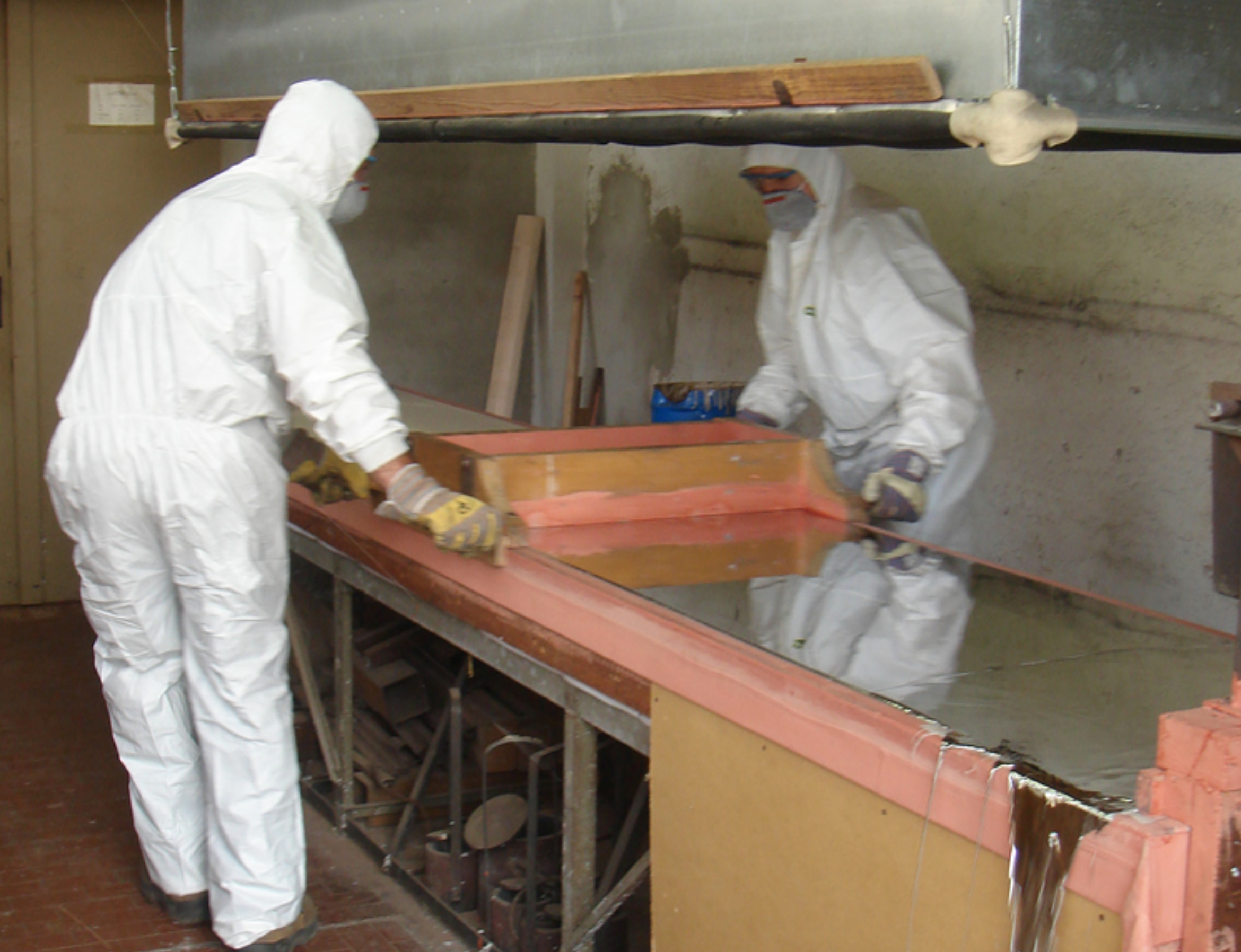
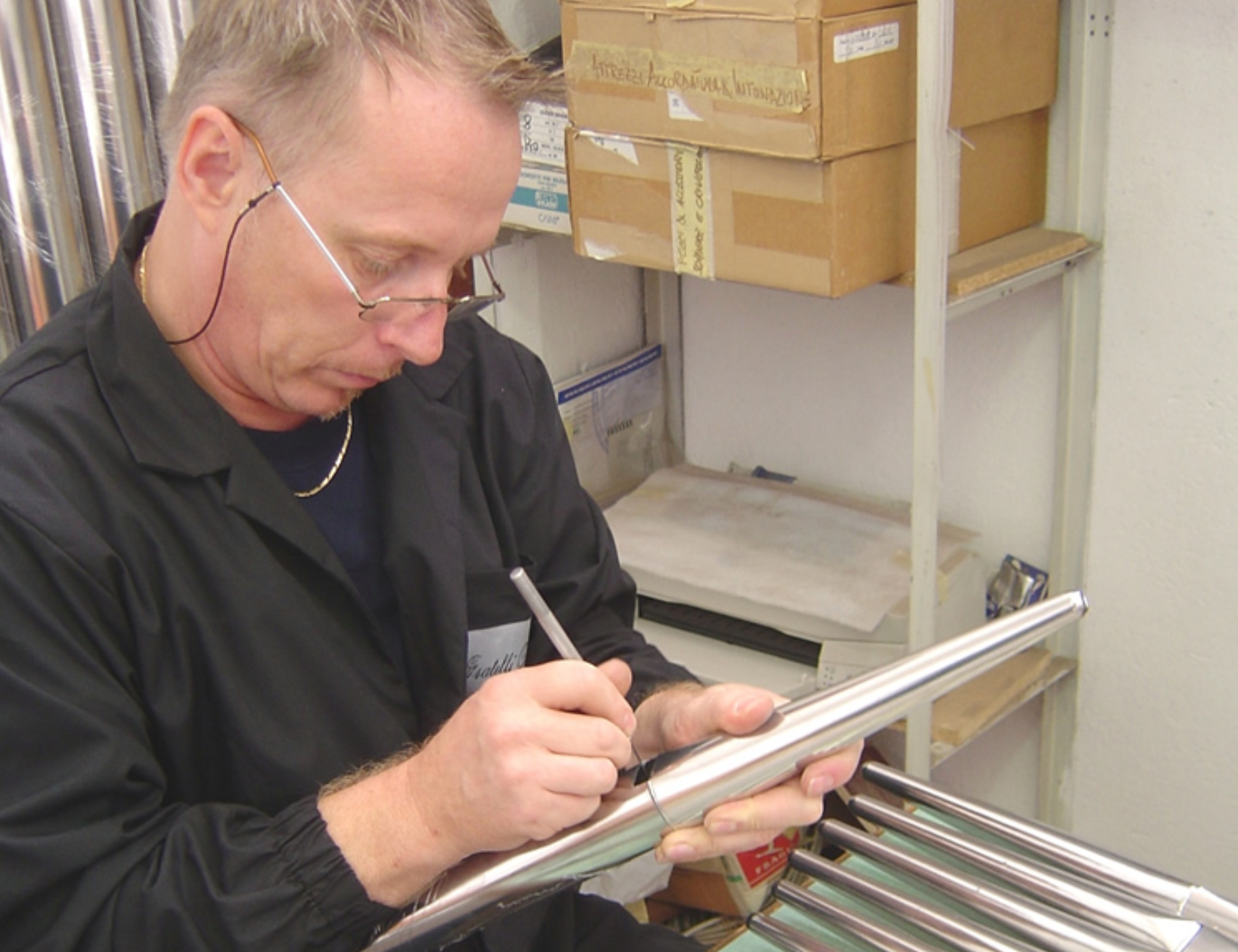
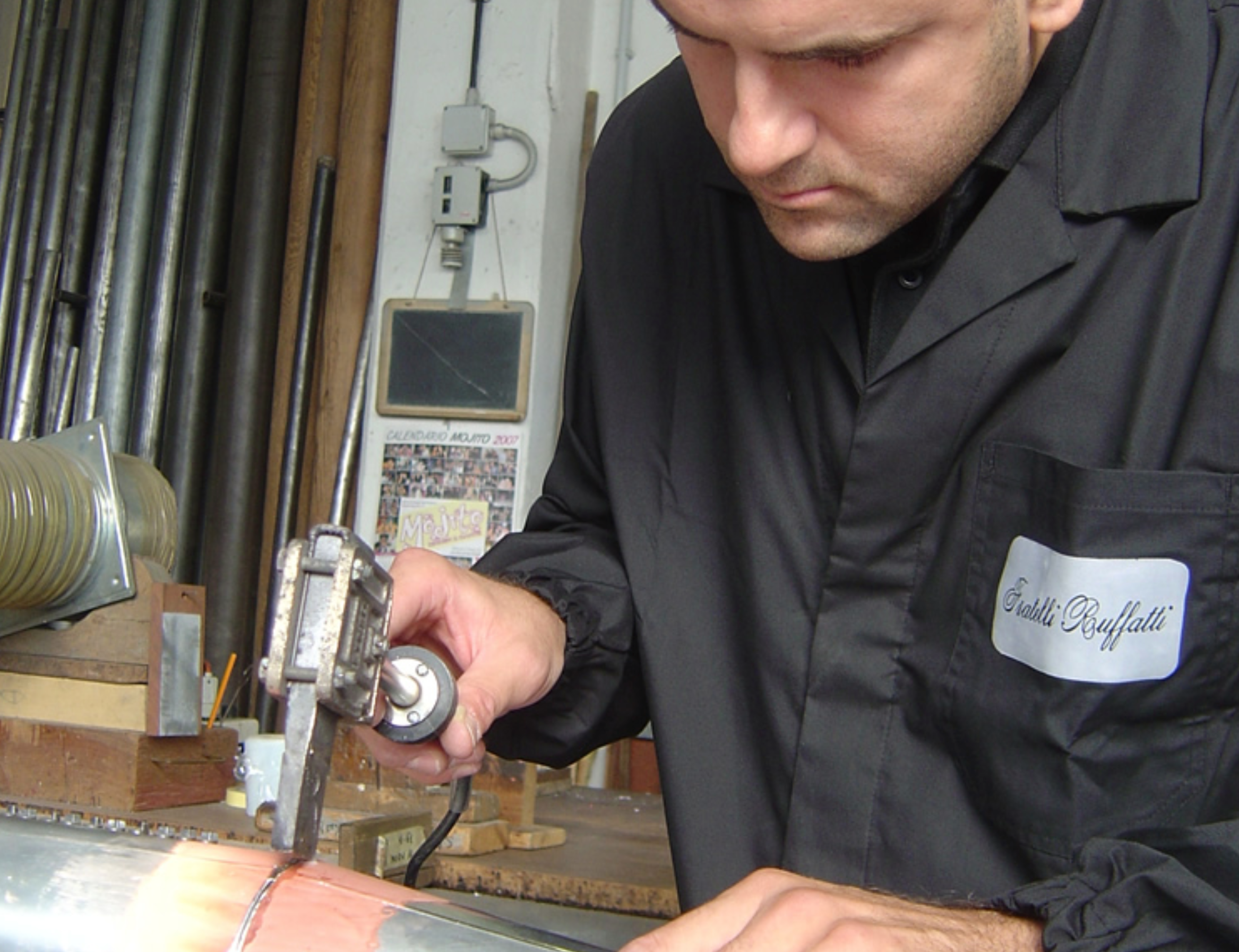
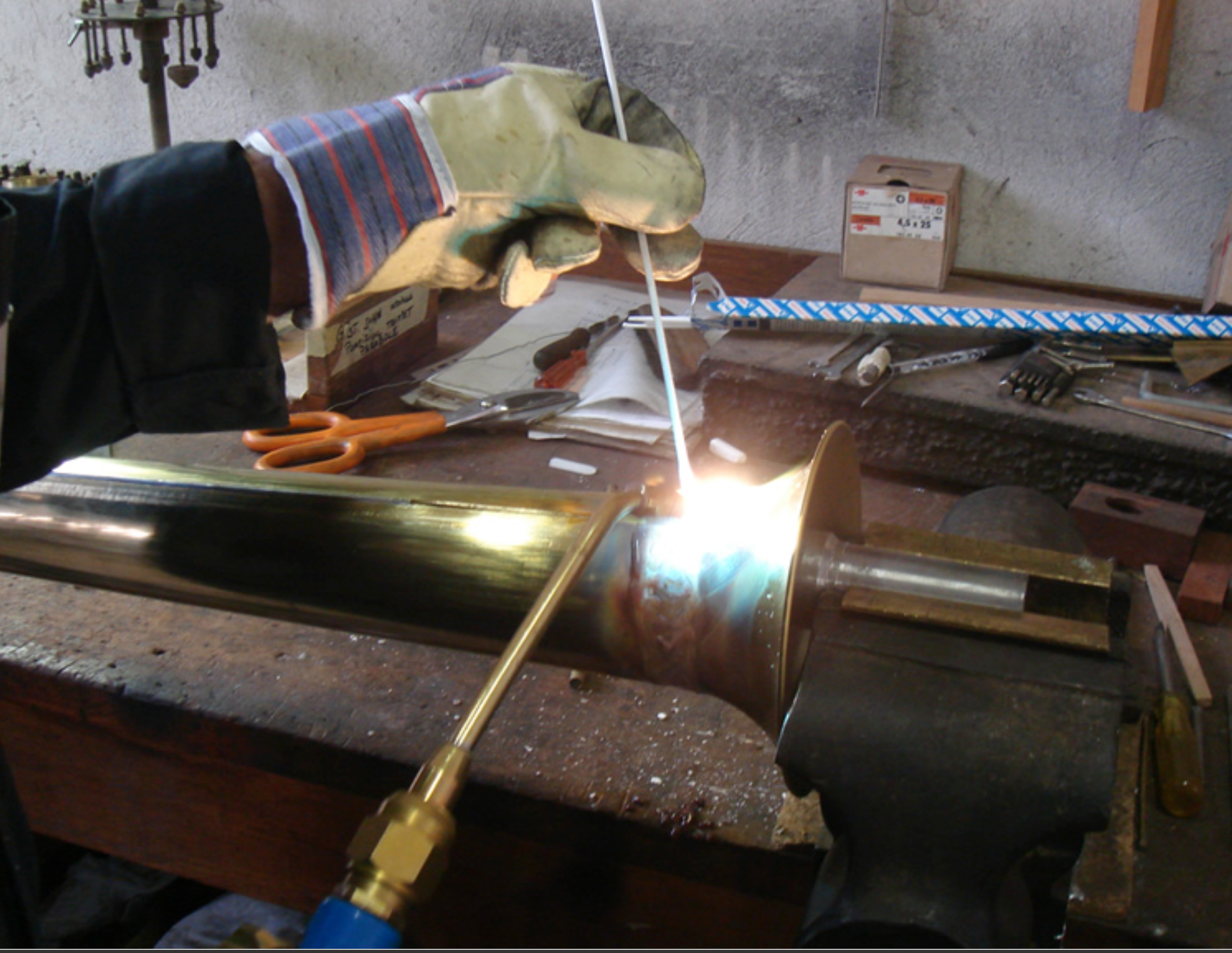
The Ruffatti pipe-making process takes place in our factory, and is the same process fine builders have used for centuries.
Flue Pipes:
Resonators for medium-size and large pipes are cut with a high-precision cutting machine. The work is faster and cleaner for such a big job, and extremely precise.
The pipe mouths are marked by hand over the inside surface of the still flat pipe resonators, in such a way that the clearly defined design of the upper lip will appear on the opposite side.
Pipe metal is soft and quite malleable, and smaller pipes can be rolled around mandrels by hand. A tapered mandrel is used to form the toe of a pipe. The metal is beaten until it conforms fully to the shape of the mandrel.
Larger pipes are rolled around machines which have been specially adapted to Ruffatti’s requirements.
The surface of the metal is protected with sizing made by Ruffatti with gum arabic. The pipe maker bevels the metal edges which will be soldered, removing the sizing only where necessary. By doing this, the solder will only flow and stick where there is no sizing, creating perfectly even solder seams. This process is exclusively done by hand, and it has remained unchanged over the course of centuries.
Pipes are then washed and rounded by hand. Steel burnishers are used for the larger ones.
At the end of the process, all pipes, large and small, are individually hand polished.
Eight-foot pipes which will never be visible, placed inside the organ, are nevertheless manufactured with the precious 95% tin alloy. Their appearance, mechanical resistance, and tonal qualities are extraordinary.
Reeds:
Making reed pipes has become extremely rare among organbuilders. It requires complicated machinery, skill, and a great deal of know-how. At Fratelli Ruffatti we design and make all of our reed stops as individual entities, introducing all the variables that make each sound unique and correct for the artistic and acoustical needs of each instrument.
The metal for the reed blocks is poured, just as it was done centuries ago. After casting, each block is individually machined to fit its corresponding foot. This ensures the ultimate structural stability, a feature which greatly contributes to the stability of tuning.
Each block is individually machined to fit its corresponding foot to ensure structural stability
Reed shallots are individually machined to create their front opening.
The shallot tips are then soldered utilizing bars of solid silver. This type of solder provides a high resistance bond.
Every conceivable model can be created or reproduced, as in the case of historical reproductions which are created utilizing the hand press, or rare models from various organbuilding traditions.
The signature stop of Fratelli Ruffatti is the beautiful Trompette en Chamade, with brass resonators that look like real orchestral trumpets. The resonator’s end piece is manufactured on the lathe and then soldered with silver solder to ensure a perfect, undetectable bond.
Wooden pipes:
All our wooden pipes are made from the best available, straight grain “Sipo”, the best and most stable among the several varieties of African mahogany. Not only is it beautiful to look at; it also has extraordinary resonance qualities that make the sound of our wooden pipes unique.
The natural properties of the wood are enhanced by a special varnish, which is applied not only outside but also inside each pipe, before it is assembled.
We manufacture a wide variety of wooden stops, from the very large Pedal Contrebass to the sweet Flauto d’Amore, a very unusual stop with chimneys at the top, and the rare Doppelflöte, featuring two opposite mouths.
From the largest to the smallest pipes, all have one feature in common: they are assembled with tongue-and-groove construction, a very elaborate technique which provides the utmost stability under any environmental condition.
The manufacturers we represent build not only the finest products available, they are also safe for you and the environment. Our manufacturers conform to the many safety, sustainability and environmental standards that our customers expect and deserve.


Join Our Mailing List
Get News and Discounts Delivered to Your Email
FOLLOW US IN OUR SOCIAL NETWORKS